
Comp Vest vs. Life Jacket: What's the Difference, and Which One Do You Need?
November 6, 2026
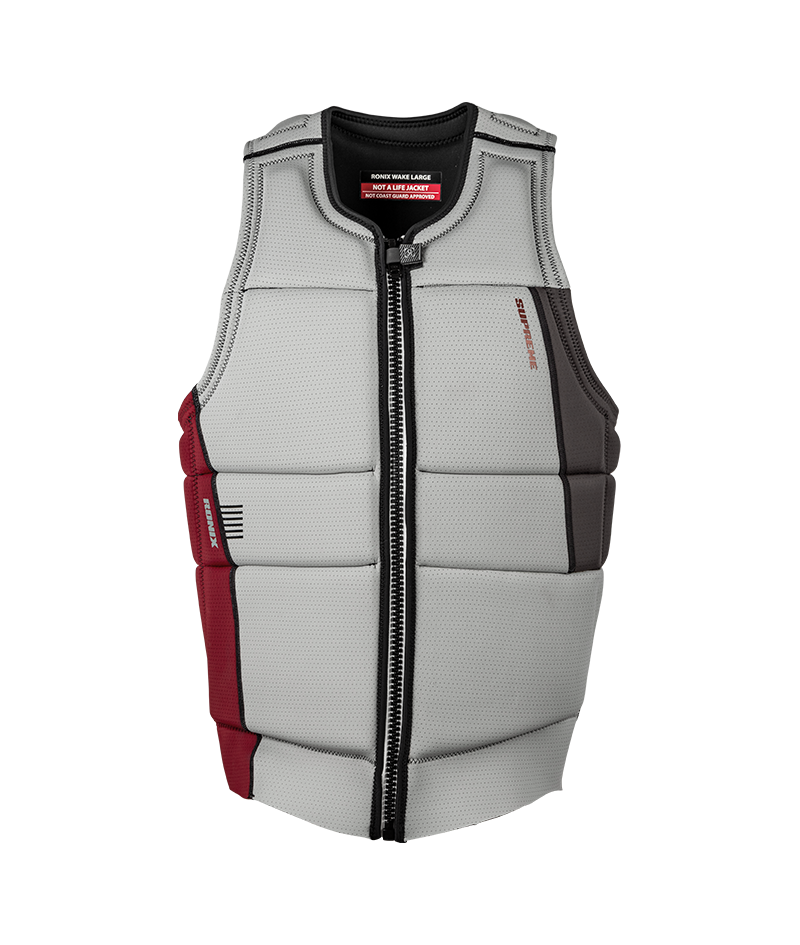
Comp vest vs life jacket comes down to one line on the label. A Coast Guard approved life jacket (the "CGA" vest) is tested to keep you afloat, and it is the gear the law counts. A comp vest is a thin neoprene impact vest built for mobility and crash padding; it floats a little, but it is not Coast Guard approved and counts for nothing legally. Rule of thumb: kids, beginners and weak swimmers wear the approved jacket, and on Georgia lakes so does anyone towed on a board. Comp vests are for strong swimmers riding where the rules allow them.

| Comp vest | Coast Guard approved life jacket | |
|---|---|---|
| Approval | None in the U.S. A CE mark is a European rating, not Coast Guard approval. | Tested and certified by a Coast Guard recognized lab; approval number on the label. |
| Flotation | Minimal and unrated on most; a few list about 50 newtons, still not approved. | Rated. Level 70, the common wake vest, is at least 70 newtons (15.74 lb); Level 50 is slimmer and counts only when worn. |
| Fit and mobility | Tight stretch neoprene, segmented foam, no buckles. | Bulkier, with buckles or straps. New low-profile L50 and L70 vests close the gap. |
| Impact protection | The whole point: padding over chest, ribs and back. | Some, from the flotation foam, but not designed as a pad. |
| Counts as required safety gear | No, federally or in Georgia. | Yes, when approved, serviceable, sized to the wearer and legibly marked. |
| Typical price at Pull Pro Shop | About $90 to $220 | About $40 to $200 |
This is general information from a shop, not legal advice.
What a comp vest is

"Comp" is short for competition: a few millimeters of segmented foam inside stretch neoprene, a front or side zip, no buckles. Some listings call it a comp life vest; the label says otherwise. Phase Five calls its version "a thin, lightweight and quick drying competition riding vest" and lists "Non coast guard approved vest" in the specs. Connelly marks its competition jacket "Not a U.S. Coast Guard Approved Life Jacket," and Ronix's Vader page says "THIS IS NOT A CGA VEST."
Mystic says it plainly: an impact vest "uses foam padding in key impact zones to protect the upper body, but it is not intended to replace a certified buoyancy aid or life vest." Our comp vests from Connelly, Follow, Liquid Force, Mystic, Phase Five and Ronix run about $90 to $220.
What a Coast Guard approved life jacket is

CGA life vest, USCGA vest, Coast Guard approved life jacket: same thing. The design was tested and certified by a Coast Guard recognized laboratory, the factory is inspected, and the jacket carries an approval number on its label.
Older labels use Type codes (I, II, III and V); most wake and ski vests were Type III, which keeps a conscious person upright. The Coast Guard's harmonization rule, effective January 6, 2025, moved approvals to performance levels 50, 70, 100, 150 and 275. The number is minimum buoyancy in newtons; "70 Newtons equals 15.74 pounds." Level 70 is the everyday wake and ski vest. Level 50 is the new slim option, "intended for use by those who can swim and who have help or rescue nearby"; its label must say "Not recommended for weak or non-swimmers," and it counts toward the federal carriage rule only while worn. Older Type-labeled jackets stay legal while they are in good and serviceable condition. Our Coast Guard approved life jackets from Connelly, Liquid Force, Radar and Ronix run about $40 to $200.
Comp vest vs life jacket: what the law requires
Federal rules
Under 33 CFR 175.15, nobody may use a recreational vessel unless "at least one wearable PFD is on board for each person," and in that rule a PFD "means a device that is approved by the Commandant under 46 CFR part 160." Each one must be serviceable, sized for the wearer and "legibly marked with its approval number." A comp vest is none of those things, so it never counts. On towed sports the Coast Guard "recommends and many states require wearing a USCG Approved Wearable PFD." Rules differ by state.
Georgia rules, including Lake Lanier
Georgia's rules (O.C.G.A. Title 52, Chapter 7), enforced by DNR game wardens:
- On board: every vessel carries "at least one personal flotation device classified and approved by the regulations of the commandant of the Coast Guard for each person on board," accessible, serviceable and legibly marked with its approval number.
- Kids: no one may operate "a moving vessel" with "a child under the age of 13 years on board" unless the child is wearing an appropriately sized PFD, except inside "a fully enclosed roofed cabin."
- Personal watercraft: everyone on a PWC wears "a U. S. Coast Guard approved Type I, II, III or V personal flotation device which is properly fitted and fastened."
- Skiing and tubing: anyone towed "on water skis, aquaplane, surfboard, or similar devices" must wear "a ski belt, ski jacket, or a Type I, II, or III United States Coast Guard approved personal flotation device."
- Wakeboarding and wakesurfing: since July 1, 2023, a separate statute makes it unlawful to wakeboard or wakesurf "when surfing a wake or being towed on a board, without wearing a personal flotation device," and Georgia defines that term as "any lifesaving device classified and approved by the regulations of the commandant of the United States Coast Guard." Exempt: intracoastal waterways, rivers, private lakes and permitted events. Lake Lanier is a public Corps of Engineers lake, so it applies there.
Put plainly: wakeboarding or wakesurfing behind a boat on Lake Lanier in a comp vest and nothing else does not meet Georgia's statute, even with an approved jacket sitting in the boat. Wear the approved jacket while you ride.
Two things we cannot settle for you. The skiing statute lists "ski belt" and "ski jacket" without defining them, and the Coast Guard's summary of state laws lists Georgia as requiring skiers to wear a Coast Guard approved PFD, so do not assume a comp vest counts as a "ski jacket." That statute also still says Type I, II or III while new jackets say Level 50 or 70. Ask Georgia DNR Law Enforcement on both. See our Lake Lanier guide for the 100-foot rule and no-wake zones.
Which one to choose
- Kids under 13: an approved youth or child jacket, worn whenever the boat is moving. No comp vests.
- Beginners: an approved Level 70 or Type III; a lesson shortens the falling phase.
- Weak swimmers: approved only, and not a Level 50; its own label rules it out.
- Experienced wakeboarders and wakesurfers: on Georgia public lakes, an approved jacket while you ride. If bulk is the complaint, try a low-profile L70 or, if you swim well, an L50.
- Cable park riders: where comp vests shine; padding matters more than float. Parks set their own vest rules, so ask.
- Foilers: impact padding earns its keep around a foil. Behind a boat on Lanier you are being towed on a board, so treat the wakeboard rule as applying.
- Everyone: whatever you ride in, the boat still carries one approved jacket per person.
Fit and sizing

Measure your chest at the widest point and use the brand's chart. Comp vests should feel tight new. Phase Five recommends a "tight fit" out of the box because "neoprene will stretch up to 10% when wet and in use."
An approved jacket should be snug with every buckle closed. The Coast Guard's test: worn correctly it "will not allow the lifejacket or buoyancy aid to rise above the wearer's chin or ears." Check the label for weight and chest range, and try it in the water the first time out. Between sizes? Use our vest size calculator or try one on in the store.
Care
Rinse in fresh water after every session and hang it in the shade to dry. The Coast Guard says jackets "should not be stowed in plastic bags, in locked or closed compartments or have other gear stowed on top of them," foam jackets "should be tested for wear and buoyancy at least once a year," and "waterlogged, faded, or otherwise damaged devices should be discarded."
FAQ
Are comp vests Coast Guard approved?
No. They are built and sold as non-approved vests, and a CE mark does not change that.
Can you wear a comp vest wakesurfing?
Not on Georgia public lakes like Lanier. The statute requires a personal flotation device while surfing a wake or being towed on a board, and Georgia defines that as a Coast Guard approved device. Rivers, intracoastal waterways and private lakes are exempt; other states have their own rules.
Do comp vests float?
A little. A few models list about 50 newtons, but none are approved as flotation and the law does not treat them as life jackets.
What does CGA mean on a life jacket?
Coast Guard Approved: the design passed testing at a Coast Guard recognized lab and carries an approval number.
Can I ride in a comp vest if there is an approved jacket in the boat?
Only where wearing one is not required. The jacket in the boat covers the carry rule; it does not cover a child under 13, a PWC rider, a skier or tuber, or anyone wakeboarding or wakesurfing in Georgia.
Come by Pull Pro Shop at 3040 Keith Bridge Rd, A1, Cumming, GA 30041, Tuesday to Saturday 10 to 6 and Sunday 10 to 3, call (678) 729-8713, or order online with free ground shipping on orders over $150.